Psychology honors thesis · 2026
Exploring power, subjective socioeconomic status, and attribution
How does recalling a powerful moment change who gets credit for an outcome?
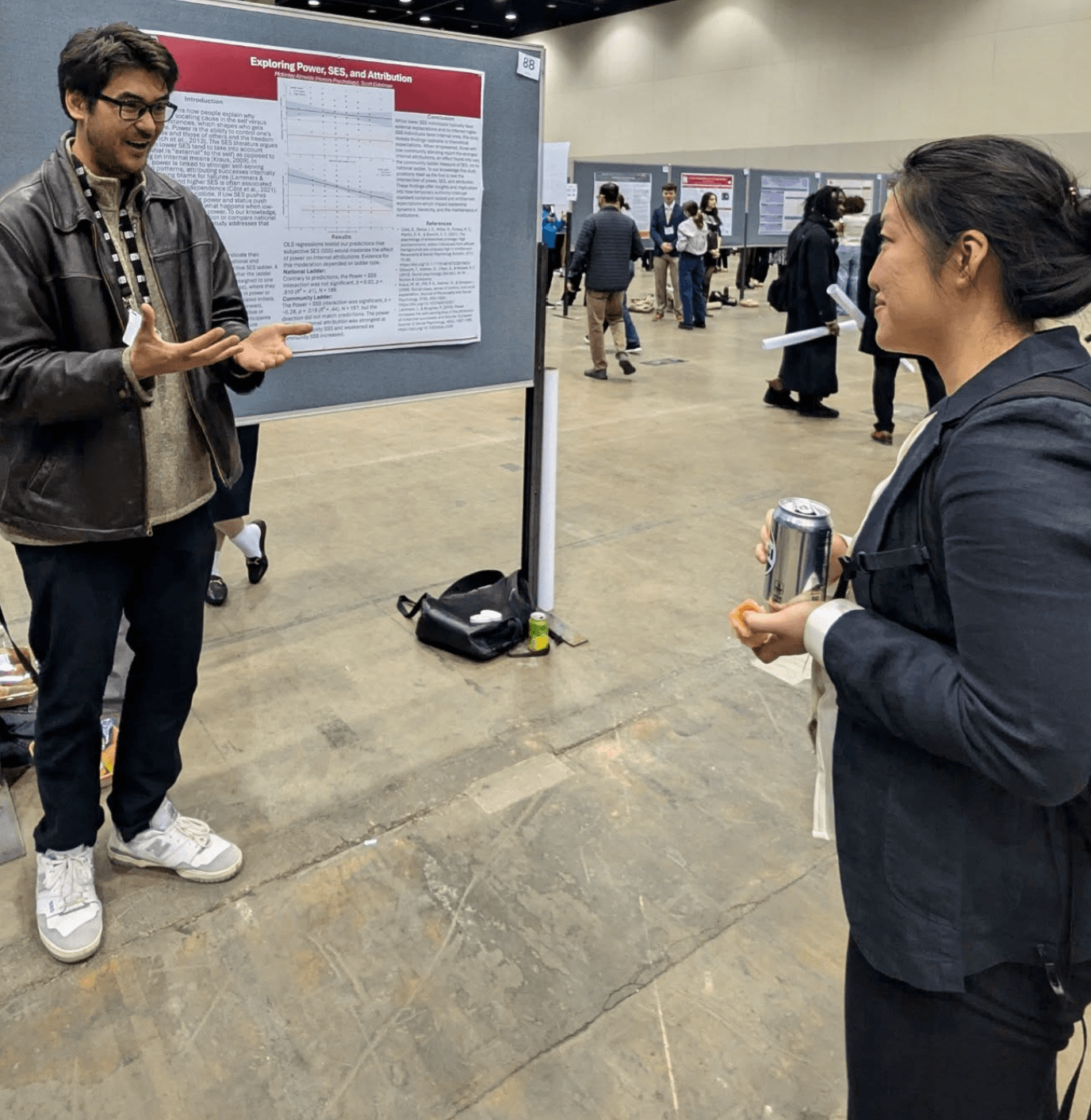
This experiment asked how remembered power shapes attribution. Participants recalled a high- or low-power episode, then rated who contributed more and who had more influence on its outcome.
Recalling high power led to more internal attribution. Subjective socioeconomic status measured with a national ladder did not significantly predict attribution or moderate the power effect.
The most surprising result came from the exploratory community-ladder analysis. In the high-power condition, people with lower subjective socioeconomic status made more internal attributions than those with higher status. This ran counter to my expectations from the literature, which associated lower status with a greater tendency toward external attribution. The result made me think more carefully about how people’s immediate sense of power interacts with the social context they use to understand their position.
Dr. Scott Eidelman advised the thesis. The related SPSP 2026 program lists my poster as Exploring Power, SES, and Attribution. That program describes the planned study; the thesis abstract reports the final findings.